A reflection for Easter
Claire Walford
Lois Bosatta reflects on the Parable of the Prodigal Son and the lessons we can learn about forced labour, ‘choiceless choices’, the shame and trauma of returning ‘home’ and the hope of welcome and restoration.
At this time of year, the Church reflects on the death and resurrection of Jesus, and what it means to us. We talk of redemption, the merciful restoration of our relationship with God, and the future when Jesus returns to conquer death, violence, abuse and sadness. This epic demonstration of love echoes the care that God the Father shows for people throughout the Bible, especially the most vulnerable and marginalised. This applies, too, for people in exploitation and slavery who we read about in scripture.
For example, when God first starts to relay his vision for society to his people, He makes provisions for the poor and those in debt through work and patterns for liberation and declares that the society representing him should not exploit or financially, physically or sexually abuse workers. In the New Testament, the apostle Paul advocates for welcome, belonging, reconciliation and even leadership for ex-slave Onesimus, in his letter to his previous owner, Philemon.
One story you might not have noticed, is in the parable of the prodigal son. A man born into privilege finds himself in a place of such desperation and shame that he feels his only option is to give himself to servitude – in this case a kind of debt bondage – to a pig farmer. I remember being told that this was shameful and his own ‘rock bottom’ due to the Jewish relationship with swine. In fact, the Greek says he ‘joined himself to’ this local man who set him to work, for no food or shelter. Doesn’t this sound like bondage, a false job advert that ended up exploiting the man for his labour? It also reminds us that none of us, however privileged, are immune from situational changes which make us vulnerable to exploitation.
These kinds of ‘choiceless choices’ exist in many parts of the world where formal employment isn’t an option, and a person has to say yes to any opportunity where they might have their basic needs taken care of, only to find themselves being exploited because of a false promise of work.
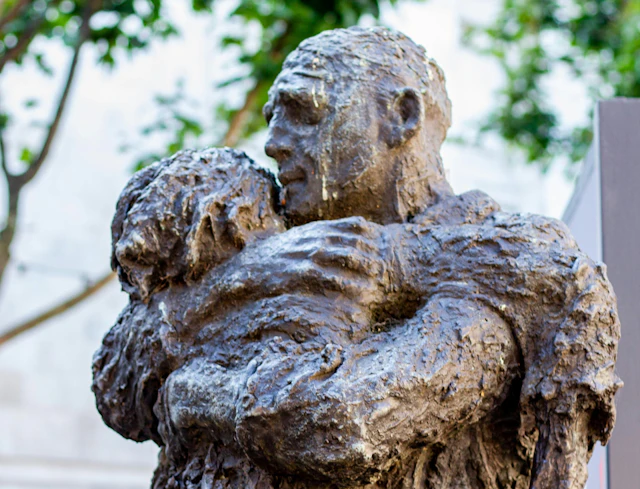
Survivors often find it very hard to return ‘home’, not only when ‘home’ doesn't exist because of war or climate devastation, but also when relationships are damaged because a community doesn’t understand the complexities of their experiences. A researcher once explored some of the issues around survivors returning home. Some faced disappointment or embarrassment as they returned without money and success, experiencing stigma, suspicion or gossip from friends and neighbours about their past. Some survivors also struggled with coping mechanisms and trauma which impacted their relationships, feeling guilt and shame about what transpired...
Of course, unlike many in situations of forced labour and debt bondage, the son in the parable remembered he had a home to go to and was able to eventually leave, knowing he had a place to belong even if he might not hope to regain his status. The father comes running out to welcome him, not as a slave or farmhand but as his son, honoured despite his previous choices or his latter circumstances.
This kind of welcome is what God longs to give every person who has hit rock bottom, feels ostracised, has been exploited or enslaved. That restored relationship from shame to ‘sonship’ is what Jesus made possible.
The journey of recovery from the traumas of such abuse can be a long road, and community can be an essential enabler of this. Community – or chosen family – is a place where we can feel seen, be shown grace and be supported to re-establish life after enslavement. This story might prompt us to think about how we can provide such welcome and careful accompaniment to survivors who might become part of our communities.
We pray today for all those who are still trapped by debt bondage, forced labour and all forms of exploitation and long for the day when they can find the welcome, restoration and grace that the son in this parable found.