
A spotlight on sport & modern slavery
Claire Walford
With the FIFA World Cup 2026 just around the corner, it won’t be long before the whole world goes football mad!
For most, this will mean joy, excitement and then crushing disappointment as they follow the highs and lows of their national team’s performance. However, there is a darker side to sport we mustn’t forget.
As we always say, modern slavery exists in every community and every sector. Sport, and sports tournaments in particular, are no exception. There are at least four ways in which modern slavery infiltrates the sports industry:
- Sports trafficking
- Exploitation surrounding sports tournaments (infrastructure, logistics, services etc)
- Fans and sexual exploitation
- Wider supply chain issues
What is sports trafficking?
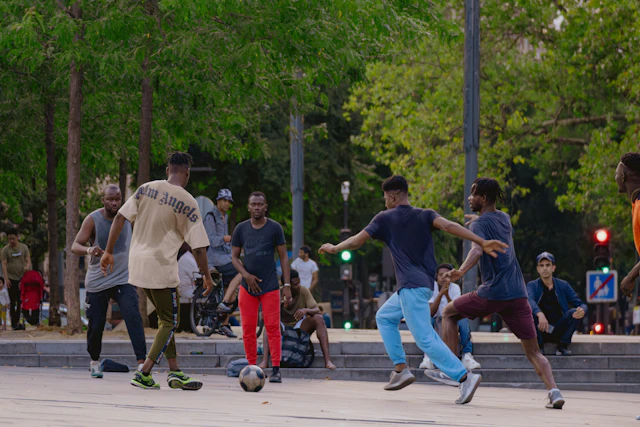
There are many ways in which modern slavery infiltrates sport. Firstly, there is the human trafficking angle which even has its own name: sports trafficking. This involves luring athletes, usually child athletes, from their home country with promises of work, training, and financial rewards, all of which are false offers and do not come to pass.
According to the U.S. Department of State’s Trafficking in Persons Report, “within Europe’s soccer industry alone, it is estimated there are 15,000 human trafficking victims each year.”
It explains: “The migration patterns vary by sport, but the exploitative scheme of recruiting, building trust and dependency, and taking control upon a job offer is universal. The confluence of athletes’ desire to play, their families’ hopes of escaping poverty, agents’ desire to profit, leagues’ interest in marketing competitive players and games, and teams’ eagerness to find young talent all create an environment that, if left unregulated, could be ripe for traffickers to exploit.”
If you are interested in finding out more about sports trafficking, the University of Nottingham’s Rights Lab published a report, focusing on the challenge of identifying sports trafficking and how it fits within existing modern slavery definitions. It states: “the exploitative nature of trafficking in sports is not always apparent and therefore, some cases may seemingly not fall within the scope of the UN’s definition of human trafficking. However, a review of the literature suggests that in some cases, there are various degrees of exploitation, deception and coercion. Like many other types of trafficking, whilst some athletes consent to their transport within and across borders in pursuit of an international career in sport, they can still be exploited on route or within the destination country.” The report also explores the nature of recruitment and exploitation and makes recommendations for future investigation and action.
Exploitation surrounding the infrastructure and logistics of hosting and servicing a tournament
In addition to the exploitation of athletes or footballers, there is also the well-publicised issue of workers being exploited in the construction of large sports stadiums. During the 2022 FIFA World Cup, there were numerous reports of exploitation and modern slavery within the construction, hospitality, cleaning, private security and waste disposal sectors in Qatar. Many migrant workers who travelled to Qatar from Nepal, Bangladesh, India, Pakistan, Sri Lanka, Philippines and Kenya faced widespread labour abuses such as paying extortionate recruitment fees (often between $500 to $4,300) to secure their jobs, creating immediate and inescapable debt bondage; having their passports and paperwork confiscated and living and working in unbearable conditions. In fact, a 2021 investigation by The Guardian found that at least 6,500 migrant workers died during the construction of World Cup venues in Qatar — some were ruled as workplace accidents and others were ruled suicides.

Fans and sexual exploitation
Once sporting tournaments are underway, the big audiences and large numbers of tourists can create an environment in which modern slavery and exploitation thrives. Although it has never been officially documented, many believe that the Super Bowl is the largest sex-trafficking event in the world. An American police officer, who conducted raids in the lead up to the Super Bowl which resulted in 750 arrests, said: "You definitely see spikes in this type of activity around the Super Bowl which is why the operation is done around that time." Anecdotes from NGOs working to support victims of trafficking suggest that thousands of women are brought into the area in the lead up to this event, and there is a significant increase in advertisements for sex, as this becomes part of the ‘tourism’ that fans seek out around the games.
We asked a UK-based charity that supports those affected by sexual exploitation about the presence of similar patterns in the UK. It confirmed that not only do they see an increase in buying sex around big sports fixtures in the UK, but violence towards sex workers increases when there are significant losses as fans take out their frustration.
Wider supply chain issues
With 104 matches, the 2026 World Cup is the largest tournament in history and is projected to generate $3.8 billion in sporting goods sales. This will include official match balls, kits, and apparel from global partners such as Adidas as well as huge volumes of in-venue, city-specific merchandise to meet demand from millions of attendees. There is a huge risk that modern slavery will be present in these complex supply chains.
In fact, the Global Slavery Index estimates that every year approximately US$200 billion worth of goods at risk of forced labour are imported into the USA, Canada and Mexico (this year’s World Cup hosts). While forced labour is present in almost every supply chain in the world it is particularly evident in the garment sector which will be responsible for making the majority of t-shirts and accessories sold at FIFA 2026 venues. Recent research from the Anti-Slavery Collective also shows how prevalent exploitation is in fake fashion and knock-off goods production so this will be another factor during the World Cup.
As with every sector, education and training is vital. To find out more about identifying modern slavery, visit our website: https://clewer.org.uk/modern-slavery/identifying-modern-slavery
The many different areas of risk highlight why we need organisations such as It's a Penalty that seeks to raise awareness of modern slavery at sports tournaments. Find out more about this vital work, by reading our interview with CEO and founder, Sarah de Carvalho MBE.
