A way forward for The Clewer Initiative
Claire Walford
Lois Bosatta, our director, sets out a compelling vision for a future free from exploitation, one in which the Church plays an active and purposeful role in prevention, protection, and restoration.
How can the Church deepen collaboration, sustain long-term perseverance, and ensure that the voices of survivors remain at the heart of every decision we make?
A Prevention Strategy for The Clewer Initiative
There is an often-quoted parable that tells of a man and woman fishing by a river. Suddenly they spot a woman in the river who is struggling for life. The couple pull her out. Then another person appears, also close to drowning, and again they pull them out. This happens all afternoon until they eventually they think: “we need to go upstream and find out why so many people are falling in the river.”
This shift in perspective invites us to look upstream, at root causes, and not just focus on the value and care which other frontline organisations rightly offer individual surviviors. The Clewer Initiative is well positioned to step back, go upstream and ask the question, why are they falling in (or being pushed!) in the first place? How can we implement interventions which help pull people out sooner, or help them learn to swim so they aren’t at risk of drowning again?
How does this vision take shape in practice?
At the heart of this vision is a public health approach to preventing modern slavery, one that works before, during and after exploitation.

Before Trafficking
This element is crucial. We must strengthen early awareness, address root causes and equip communities, especially young people, to recognise risk long before exploitation takes place. The Clewer Initiative already provides posters for foodbanks, lesson plans for school children in key stage 2 and 3, and resources for parents and grandparents on child criminal exploitation. We want to continue this work as well as support awareness events with cathedrals, youth groups and schools . Last year, we forged a new relationship with the Girls Brigade to develop a special badge called “Respectful Communities” for ages 4–18, introducing concepts of community safety, injustice and valuing our fellow humans. This is just one example of how we can help raise awareness and educate key demographics.
Early Identification
Helping communities identify people at risk sooner, means we can help prevent further harm being done. This pillar is about building confidence across churches and communities to spot the signs, respond safely and reduce the harm experienced by victims. A practical example of what we are already doing in this area is The Clewer’s Initiative’s Safe Car Wash app, which allows people to report warning signs such as someone living at a hand car wash, poor PPE or aggressive behaviour towards workers. This simple and innovative tool has generated valuable insights for agencies to identify and support victims, as well as informing high-level discussions on policy.
Aftercare and Preventing Re-exploitation
Finally, this pillar is about equipping communities to prevent re-exploitation by supporting survivors as they rebuild their lives. The Clewer Initiative can encourage the Church to consider how their social action projects and community groups address ongoing vulnerabilities such as poverty, unemployment, trauma and isolation. This includes helping churches grow into safe, welcoming, trauma-informed spaces, to enable trust and long-term stability.
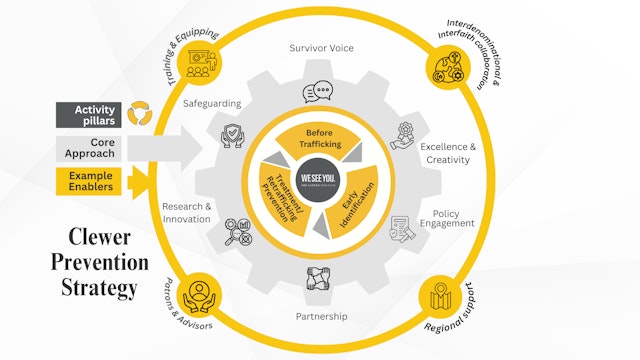
There are four enablers which support these prevention pillars – getting consultation and support through patrons & advisors, providing more nuanced regional support, expanding our training offering and investing in interdenominational & interfaith collaboration. We believe these important aspects of our approach will help us deliver impactful prevention work across each pillar of activity.
We also have core principles underpinning everything we do:
- Partnership and Collaboration - Working with churches, other denominations and faith groups, professionals and experts from statutory and third sector organisations to unify our work and avoid silos.
- Safeguarding and Survivor Involvement- Ensuring all work is safe, ethical and shaped by the insights of those with lived experience.
- Excellence and Creativity - Continuing to produce clear, professional resources that build confidence and raise awareness effectively.
- Policy Engagement and Research- Using evidence, data and partnership to advocate for change and develop innovative tools that support frontline communities.
A way forward
This vision marks just the beginning. In the months ahead, The Clewer Initiative will be fundraising, building a team, reviewing historical work and reconnecting with local champions all over the country. In 2026 we want to particularly look at:
- Hiring a Training and Development manager to help us bring a renewed focus on delivering high-quality, accessible training that strengthens prevention work at every stage.
- Seek funding to invest in the expansion of our successful Safe Car Wash App into a solution which considers other sites of exploitation on our high streets.
There is much more to come, from expanding training and regional support to fresh collaborations and innovative resources, all designed to equip faith communities to help build a future where people can live free from exploitation.