Taking action in the Diocese of Rochester
Claire Walford
A year of county lines workshops in schools; modern slavery training and an ambassador push.
Over the last year, the Diocese of Rochester has renewed its commitment to fighting modern slavery in the region.
Magali van der Merwe, the Lead Community Engagement and Social Action Adviser at the Diocese explains: “Modern slavery has always been something we have cared about at the Diocese of Rochester and Bishop Simon, the Bishop of Tonbridge, is a keen supporter and patron of The Clewer Initiative.
“Last Summer, we decided we wanted to reinvigorate our Modern Slavery Network Working Group which consisted of eight ambassadors. We organised a three-hour training workshop with Paul Withrington, a former police officer, the co-founder of Kent’s first Anti-Slavery Partnership and modern slavery trainer. He spoke to us about different forms of modern slavery, how to spot the signs, the law and how the National Referral Mechanism works.
“Paul also challenged us to think more deeply about prevention and being proactive in the fight against modern slavery, not just reactive. This got us considering how we could use our platform in the Diocese to raise awareness further ‘upstream’ before exploitation even takes place. We concluded that schools’ awareness was something we could pioneer and develop.”
The Diocese was able to use grant money from the Colyer Fergusson Charitable Trust, a local organisation that helps support vulnerable and disadvantaged people living in Kent and Medway. With funds in place, Magali and Paul approached Sosa Henkoma, who has lived experience of criminal child exploitation, and invited him to lead a series of county lines schools’ workshops alongside Paul. Together, Paul and Sosa developed classroom material for Key Stage 2 and 3 .
Paul outlines their vision: “I passionately believe that if you are young enough to be exploited, you are young enough to be educated. Sosa was eight when he was groomed so we must start the education process young. Sosa and I have worked hard to create a lesson plan that is age-appropriate and helps children begin to recognise the signs of county lines and exploitation as well as understand how the grooming process works. The combination of my law enforcement background and Sosa’s lived experience means we can be engaging, relevant and informative. I am excited about delivering these lessons in schools across Kent and am extremely thankful to the Diocese and the Colyer Fergusson Charitable Trust for making it possible.”

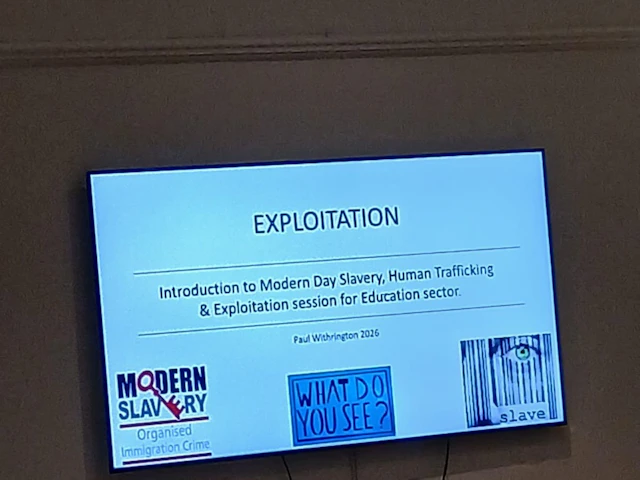
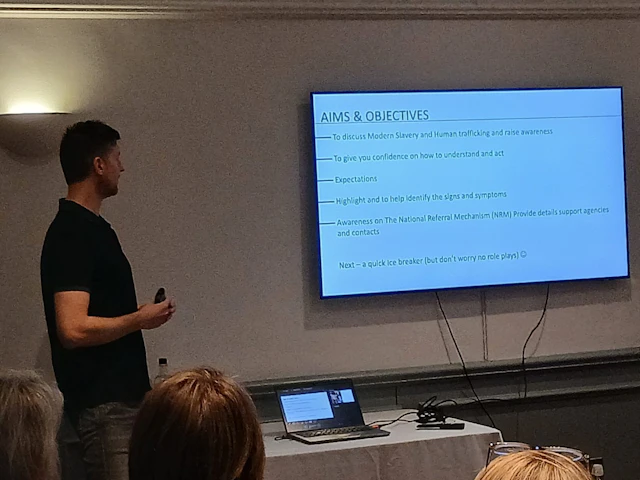
Ahead of the 16 workshops, Paul spoke at a training session with Church of England school headteachers in the Diocese. His short presentation whet the appetite of the Heads who were gathered and increased their confidence in Paul as a trainer and in the material. Paul was able to show them that the lessons will be sensitively pitched as well as engaging and fun.
The final piece of the Diocese’s modern slavery strategy is a new training package that it is developing for groups. It envisages the material being used to train parishes, staff, clergy, members of the Diocesan Mothers’ Union and volunteers within its community hubs. Magali has been working hard on the content, pulling together material from different modern slavery charities including The Clewer Initiative.
Magali concludes: “Our hope is that our modern slavery ambassadors will deliver the training in settings across the Diocese. We will cascade the knowledge as far and wide as possible including within community settings and schools. We are excited about the key role these ambassadors will play and hope to commission them at a special service on Anti-Slavery Day in October.
“It takes time to develop this sort of grassroots, community-engagement work but there are many passionate people out there who care about modern slavery, want to find out more and help educate others. I am amazed at the energy and commitment that people have shown and I can’t wait to see the impact they have as they begin passing their knowledge on to others.”

In terms of lessons learnt and advice for other Dioceses, Magali says that partnership is vital. She explains: “First and foremost, this project has been made possible by the volunteers in the group who have given their time so freely. We are now looking at deepening our partnership with the local Diocesan Mothers’ Union to help roll out the training further. Bringing in specialists such as Paul and people with Lived Experience such as Sosa has also brought an integrity and depth to the work that we couldn’t have achieved on our own.”
Bishop Simon adds: “Faith is detective work: putting the pieces together of how God is at work in our broken world. Spotting the signs of modern slavery is part of this detective work because we are called to set the captives free. What clues are crying out to be picked up? Our focus as a diocese is on training as many people as possible because, quite simply, a trained person is far more likely to spot those clues and know what to do with them.”
"Our focus as a diocese is on training as many people as possible because, quite simply, a trained person is far more likely to spot the signs and know what to do with them."

Paul concludes: “The Diocese has taken a proactive, preventative approach and this is extremely refreshing. I believe the training package and schools' workshops will be effective in raising awareness in the parishes and educating young people before they get targeted. The ambassador group is keen to take their knowledge forward – they might not be experts, but they know a lot more than many people and therefore could make a real difference as they speak at events and workshops over the coming months. It has been a privilege to work alongside Sosa, and the team at the Diocese.”
Key takeaways for other Dioceses:
- Identify local needs (and local funding which might support this!)
- Get 2-3 experts involved (lived and professional experiences are helpful)
- Think about the audience and context for the knowledge e.g. in this case, engaging teachers and kids
- Train and empower volunteers who can help scale up the activity and share the knowledge wider