
It’s harvest time!
Claire Walford
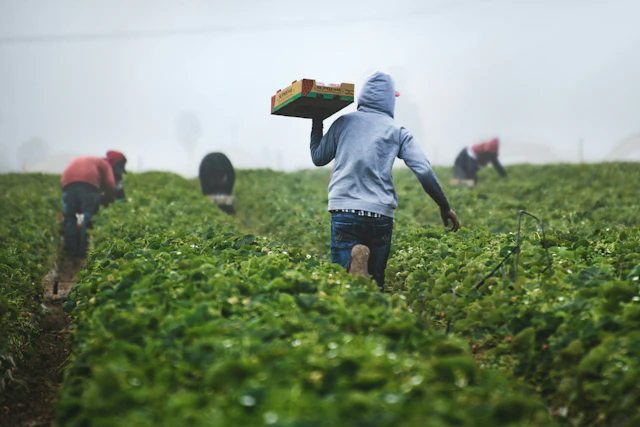
From May until October, farms across the UK will be in peak picking season!
Between 65,000 – 75,000 temporary workers are required to bring in the harvest of strawberries, raspberries, blueberries, gooseberries, blackcurrants, blackberries, plums, sweetcorn, beans, apples, pears, plums, pumpkins and squash harvests.
While most farms and labour providers comply with employment law, a small number of recruiters, gangmasters, labour intermediaries, or employers exploit their workers.
Ripe for exploitation?
There are several reasons why this sector is targeted by criminals:
- The nature of seasonal and temporary employment means that workers may only be employed for a few weeks or months. This high turnover can make oversight more difficult and employees can be “invisible.”
- The pressure to get the harvest in before fruit and vegetables perish creates a high-pressure environment that criminals exploit to force long hours and deny basic rights.
3. Many migrant workers find jobs in the sector:
- This results in a lack of familiarity with UK laws, employment rights, and complaint mechanisms.
- They may have paid exorbitant fees for travel, visas, and accommodation to traffickers and illegal labour providers, creating a cycle of debt bondage and enabling exploiters to justify withholding wages.
- Language barriers and the fear deportation or visa termination can further exacerbate the situation and can result in migrants being unwilling to seek help.
- Coming from overseas, they may also rely on employers or recruiters for housing, transport, and work and this vulnerability can increase risk.
4. Remote workplaces: as farms are often in rural locations with limited access to support services, this can result in exploitation and abuse going undetected for longer.
5. Employers’ reliance on recruiters – because of the need to recruit thousands of casual workers over a short period, many agricultural businesses rely on recruiters to source workers and might not interview / meet / pay workers directly. This allows unethical labour contractors and gangmasters to place and exploit workers on legitimate farms without a farmer's knowledge.

In light of these risks, it is vital we educate:
- Farm businesses / people living in rural communities about modern slavery and exploitation and how criminals might infiltrate legitimate businesses.
- Potential workers about their worker rights / what to expect / how to seek help
Worker rights
Identifying work rights abuses early can help prevent further harm. Workers are entitled to:
- Fair treatment and respect
- Written confirmation of their main terms and conditions of employment
- Be paid the minimum wage
- A wage slip
- Have only what is legal and fair deducted from pay
- Safe working conditions, including protective equipment and training
- Safe and reasonable accommodation
- Paid holidays and appropriate rest breaks.
However, if a worker has:
- ...been forced to work against their will, including forced overtime
- ...not been paid the agreed amount for their work
- ...had their identification documents taken away
- ...had threats about deportation or being exposed to police or border force
- ...been threatened or abused
- ...been under constant control or surveillance
- ...been deceived or misled about work or their living conditions
then they may be in a situation of forced labour.
Organisations like the Worker Support Centre (WSC) partner with people on seasonal visas in Scotland to ensure they know their rights, can access support, and are able to stand up to unfair treatment.
“Every year, thousands of people come to the UK to do essential work that keeps food on our tables. They deserve to be safe, respected, and treated fairly. Many are already coming together to improve conditions on farms, showing us what true fair workplaces should look like.
We see every day that when workers know their rights and are supported to act together, exploitation can be challenged and stopped. Building a country that truly welcomes every worker means all of us – communities, employers and government – playing a role in ensuring dignity at work”.
Learn more – read WSC’s annual report to understand the realities of seasonal work and the changes workers are calling for.
Share information – help ensure workers in your community know their rights by sharing resources like WSC’s Know Your Rights guide. Workers can phone WSC at 0800 058 1633 for support (their team speaks a range of languages) or email [email protected].
Stay informed – sign up to WSC’s newsletter to hear directly about workers’ experiences and ways to take action.
_____ ______ _____
If you have concerns about working conditions or abuses, contact the Fair Work Agency on 0345 161 6000 or by emailing [email protected] for general enquiries.
For workers on the seasonal work visa, call the seasonal worker hotline: 08000 315 049 - or contact the support line via whatsapp, telegram or online form accessed here: Seasonal Worker Support Line - Unseen (available in multiple languages, described in this poster)

Seasonal Worker Support Line poster
Download our new poster that seeks to inform seasonal workers about their employment rights and who to call if they have concerns.

