Using tech to disrupt the criminals
Claire Walford
When Ruth Dearnley heard about the scale of human trafficking across the world, she knew she had to do something.
She founded STOP THE TRAFFIK in 2005 and began campaigning, going to large Christian conferences such as Spring Harvest to build support and momentum.
Ruth explains: “I met people all over the world who were doing incredible front-line work, but they were always exhausted because for every person they rescued, it didn’t disrupt the traffickers’ business model. I came across the deputy director of human intelligence at the Serious Organised Crime Agency at an event, and he started me on the journey of understanding how sharing data and intelligence could change everything!
“I realised that all these different organisations – government, NGOs, faith networks, businesses, banks, law enforcement and individuals - knew different bits of information about modern slavery and human trafficking, but no one was collecting it. It felt like a jigsaw, and I saw that if we could build a technology platform and put all the pieces together, then we could begin to understand the big picture and start to be effective in our war against the criminal networks.
In 2017, in collaboration with IBM, STOP THE TRAFFIK launched the Traffik Analysis Hub, translating the largest collection of survivor stories into a comprehensive and interactive database. STOP THE TRAFFIK now uses AI to analyse the data and look for patterns and hotspots. This intelligence can be used by banks, businesses and law enforcement to go “upstream” and stop something from happening before it happens.
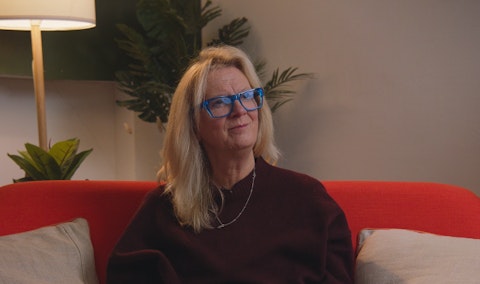
Watch Ruth explain the ground-breaking work of STOP THE TRAFFIK
One of STOP THE TRAFFIK’s other tactics is geotargeted social media campaigns. This is another brilliant way in which the organisation is harnessing modern technology to fight human trafficking. It uses social media adverts to inform at-risk groups about how to spot the signs of trafficking, where to report it and offers legitimate alternative recruitment pathways to vulnerable, hard-to-reach communities.
STOP THE TRAFFIK was contacted by a young person from Afghanistan who had seen one of its campaigns. He lived in a closed camp in Lesbos. He feared deportation and was told he had to pay for a lawyer. Out of desperation, he was considering selling an organ for money to pay the lawyer. STOP THE TRAFFIK advised him of the dangerous situation he was considering and the potential risks. It assured him that he was entitled to legal aid and connected him with an organisation that could provide shelter and legal support.
He said: “I had many problems. I was considering selling one of my organs to solve my problems in Greece. I now have good living conditions. Thank you to your good organisation.”
He was later granted asylum and no longer faces the threat of deportation. He is attending school and is learning English and Greek. Thanks to the support he received, he is no longer considering putting himself in high-risk situations.
Ruth adds: “We kept him safe, and he went on to live a whole different life. Over the last eight years, we’ve reached more than 30 million people from Ukraine, the Philippines, the UK, America, Europe, Africa, India and Nepal through geo-targeted social media campaigns like this. We work globally and locally. Technology is giving us the tools, but the tools alone aren’t enough. It’s the stories that we share and the leadership that means we work together in a way that transforms the world."
Find out more about STOP THE TRAFFIK's incredible work here